Project
WhichCar
Moving one of Australia’s biggest motoring publishers off a headless CMS and onto WordPress
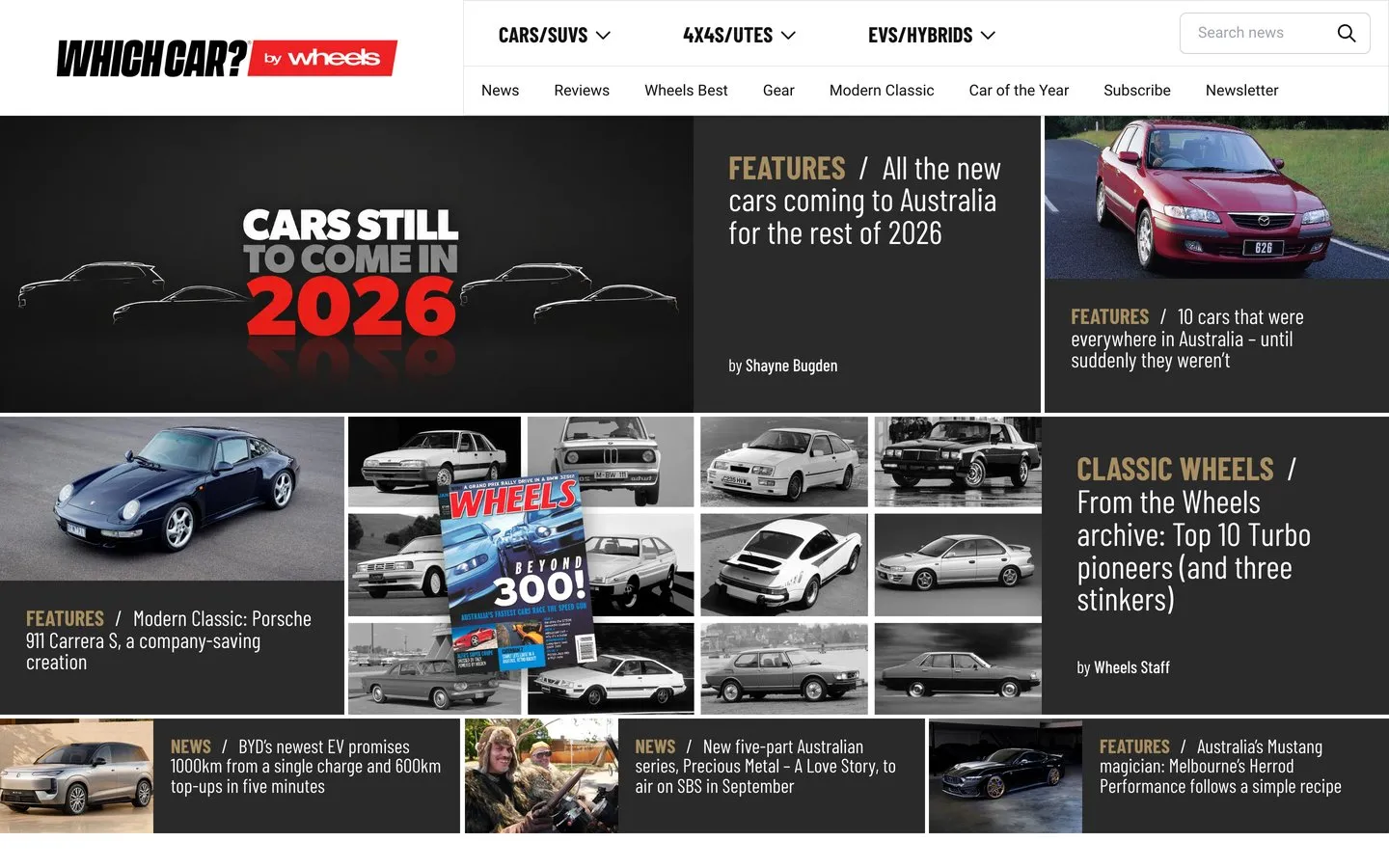
WhichCar is Wheels Media’s motoring network, carrying the work of three of Australia’s best known car titles: Wheels, which has been published since 1953, MOTOR, and WhichCar itself. It is where Australians go to work out which car to buy, and it publishes daily. The site ran on Sanity, a headless content system. The job was to move the whole thing to WordPress without readers noticing.
Project Scope
- Headless CMS to WordPress migration
- Custom WordPress theme and blocks
- Vehicle taxonomy and model pages
- Advertising integration
- Site search and image delivery
- Ongoing development and support
The challenge
A publisher’s archive is years of work that still brings readers in. Tens of thousands of articles, each one still found through Google and still linked to from somewhere. Changing platform means every one of those articles has to arrive on the other side with its address, its images, its galleries, its author and its car tags intact. Get a slice of it wrong and readers land on broken pages.
The design had to survive too. Readers should be able to visit the morning after a platform migration and see the site they know. And 4X4 Australia, which began inside the WhichCar network and now runs as its own website, needed the same move. The build had to serve both publishers from the start.
What I built
A custom WordPress build that reproduces the site readers already knew, plus the tooling to move the entire archive into it. The same build serves WhichCar and 4X4 Australia, two independent publishers, each with its own look.
The archive, moved intact
Tens of thousands of articles with their images, galleries, authors, categories and vehicle tags, rebuilt in WordPress. The import was written as a repeatable pipeline, so it could be run, checked, corrected and run again until it was right, rather than being a single nervous night.
Pages the editors build themselves
The theme ships more than 40 content blocks, so an editor can assemble a comparison, a buying guide or a landing page without a developer. Every make and model has its own hub page that gathers the relevant reviews, news and advice automatically as new stories are published.
Advertising carried across
Every ad position came across with the content and worked from the first day, inside the page layouts readers already knew. Nothing about the advertising had to be rebuilt after launch.
Search and speed at scale
An archive this size is only useful if a reader can find the one article they want, so site search suggests results as they type, and a headline match counts for more than a passing mention. Images are served from a global delivery network, which keeps pages quick under the traffic a national masthead pulls.
Across the site
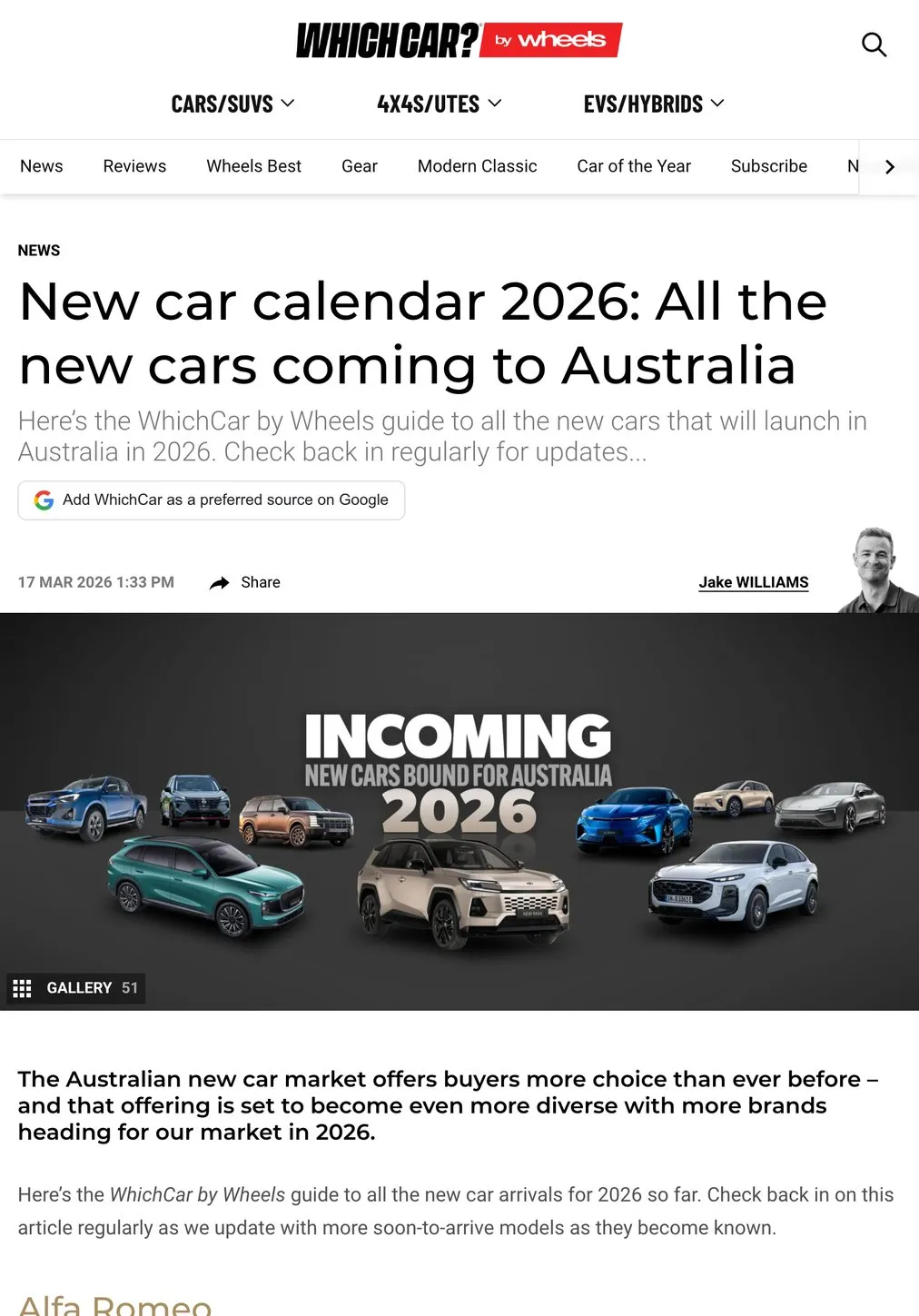
Articles: byline, gallery and share, on any screen
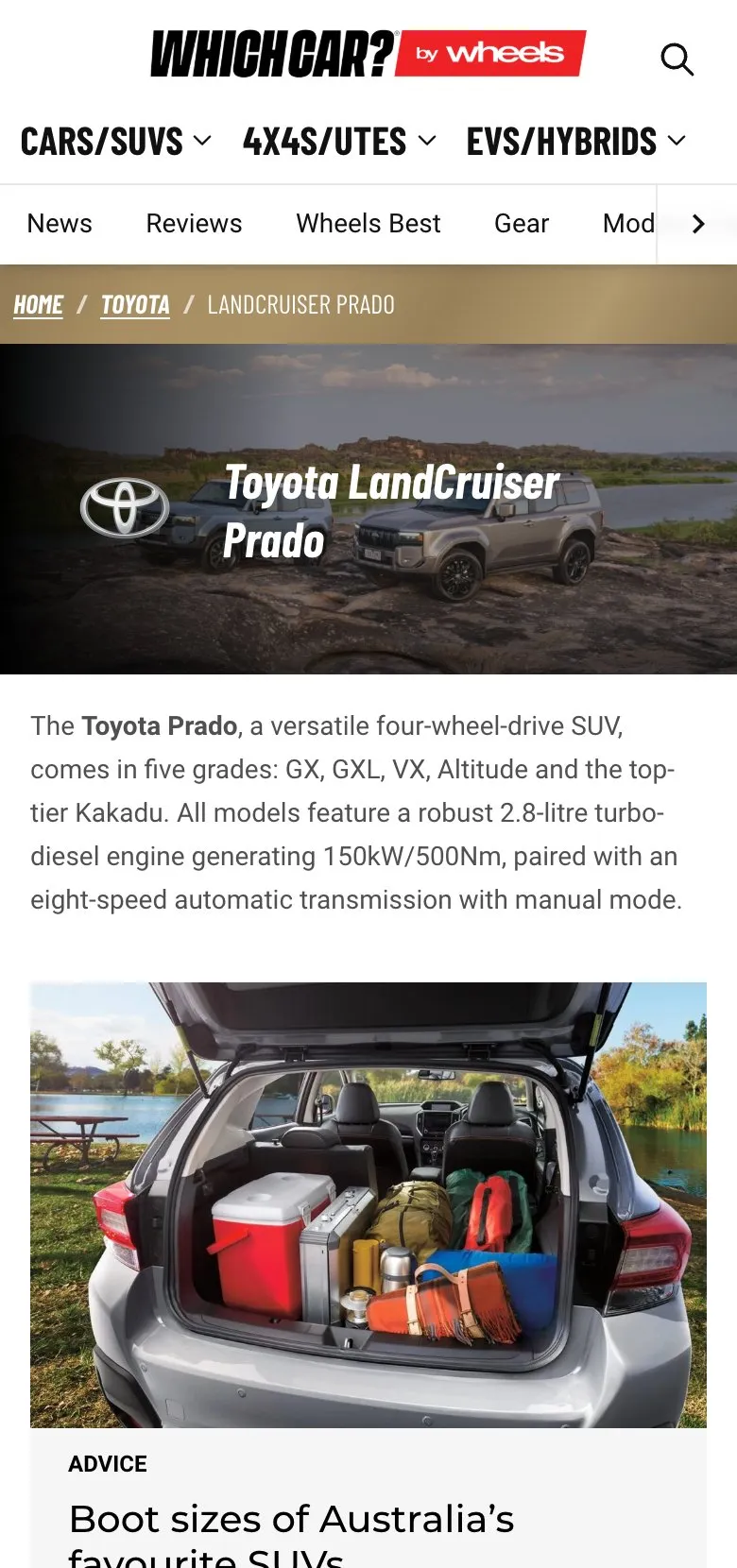
Model pages: every car gets its own hub
The result
WhichCar now runs on WordPress, with the design, the addresses and the advertising all where readers and advertisers left them. The editorial team publishes and builds pages without waiting on a developer.
I have stayed on as the site’s developer since launch. That means new features for the editors, WordPress and plugin updates, and the performance and security work that keeps a site this size fast.
If you are weighing up a platform move, or you run a site big enough that the migration is the scary part, I would like to hear about it. Read more about WordPress consulting and migration planning, see the LEGO Star Wars: The Exhibition build, or get in touch.
Phil is an absolute pro to work with and undertook a website migration for us that seemed near impossible. Phil’s ability to understand our previous Sanity-based CMS and AWS-based tech stack was key to enabling a migration to a WordPress solution. His broad understanding of website development ensured we were able to migrate thousands of WhichCar, Wheels, Motor and 4X4 Australia articles and images to a WordPress solution whilst retaining the pre-existing site design, SEO performance and business-critical features…

Common questions about this project
Yes, if the URLs are treated as part of the migration rather than an afterthought. On WhichCar the articles kept the addresses they already had, so existing links, bookmarks and search results still work. Where an address had to change, a redirect catches it. That is the single biggest factor in whether traffic survives a platform move.
A headless setup splits the content system from the website, which usually means a developer is needed for changes an editor should be able to make alone. WordPress puts publishing back in the hands of the editorial team and has a far larger pool of people who can work on it. The trade-off is that WordPress needs looking after properly at this scale, which is what the ongoing support covers.
A migration this size runs over several months. Most of that time goes into the custom theme and the import tooling rather than the content move itself. The import is built to be run, checked and run again, so the final switchover is a routine repeat of something already rehearsed many times.
Yes. WhichCar and 4X4 Australia are national mastheads with large archives, advertising on every page and an editorial team publishing daily. Sites at that scale need someone who thinks about caching, search and load as part of the build, not as a separate problem for later.
I stayed on as the site developer. That covers new features for the editorial team, performance and security work, WordPress and plugin updates, and responding when something needs attention. For a business that earns its money through its website, launch is the start of the relationship rather than the end of it.
Yes. WhichCar and 4X4 Australia are independent publishers, and the build was designed to serve both. A feature built for one is available to the other, which suits any business running several titles or several regional brands.